What 5G-A's Full-Scale Rollout Means for V2X and Autonomous Driving
Author: Michael J. Reynolds|Last updated date: April 24, 2026|Reading time:~11 minutes
Over the past two years, advanced driver-assistance systems have moved from expensive options to mass-market features. But a fundamental physical bottleneck is becoming impossible to ignore.
Lidar, millimeter-wave radar, and cameras all share the same limitation—they can only perceive what falls within their line of sight.
Today's flagship production lidar units have an effective range of roughly 200 to 250 meters (source: Yole Group, LiDAR for Automotive 2025 Report). A passenger car traveling at 120 km/h needs to detect a stationary obstacle, make a decision, and brake to a complete stop. The total distance required often exceeds 300 meters (source: Euro NCAP testing protocols and NHTSA braking distance benchmarks).
That gap of about 100 meters is a perception blind spot—a number derived from subtracting the upper lidar range from the minimum required stopping distance. No amount of extra on-chip computing power can close it. It is a product of physics, not bad code.
For two decades, the auto industry has stuck to a simple formula: mount more expensive sensors, add faster processors, write more complex algorithms. That path is now brushing against its physical ceiling.
This is why vehicle-to-everything collaboration was proposed more than 20 years ago—let vehicles talk in real time to roadside cameras, traffic lights, and even other vehicles beyond their field of view. But the idea has always been held back by a missing piece: a wireless network fast enough, stable enough, and widespread enough to make it work.
That network did not exist before 2026.
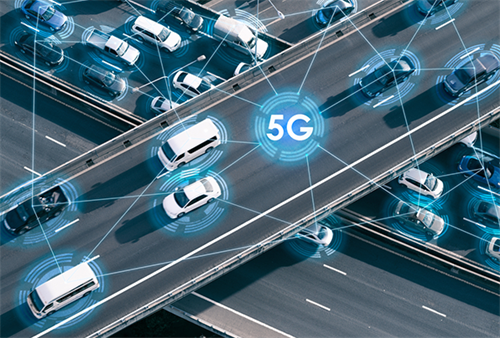
In the spring of 2026, things are starting to shift. 5G-Advanced (5G-A) has achieved contiguous coverage across 330 cities in China (source: China's Ministry of Industry and Information Technology, State Council press briefing, April 21, 2026). On test tracks in Sacramento and Northern Europe, V2X road trials have moved from one-off demonstrations to repeatable, everyday events.
For the first time, we have a communications foundation that allows cars and roads to speak to each other in real time. The story here is not about how far one car can see—it is about how much the road can see on your behalf.
What exactly does 5G-A upgrade? Three things explained in driving terms
Most people react the same way the first time they hear "5G-A": "My phone already has 5G. This is just another marketing label."
That instinct is not entirely wrong. If you measure only video-streaming speed, the difference is hardly emotional. But for a car moving at 80 km/h, the difference concerns a different category of risk.
Traditional vehicle connectivity has three well-known weaknesses: latency is too high, the signal is unreliable, and coverage is full of holes. 5G-A makes fundamental repairs in three areas.
1. When I slam the brakes, the whole road "hears" it at the same instant—what reliable low latency means
In January 2026, SoftBank ran a field trial on its live commercial 5G SA network in Tokyo, together with Ericsson and Qualcomm. They specifically tested a 5G-A feature called L4S—Low Latency, Low Loss, Scalable Throughput.
According to the joint press release published by the three companies on January 15, 2026, Ericsson released a figure that has been widely cited inside the industry: compared with the non-5G-A baseline, the radio link latency dropped by roughly 90%.
What does 90% mean in practice?
On a typical 5G network, a data round trip wobbles between 100 and 200 milliseconds (source: 3GPP TR 38.913, latency targets for eMBB). With 5G-A and L4S enabled, that figure is squeezed below 20 milliseconds. The average human reaction time—from seeing a hazard to pressing the brake pedal—is about 200 to 250 milliseconds (source: NHTSA, Driver Reaction Time Research).
In other words, this network pipe is an order of magnitude faster than the most alert human driver.
More importantly, L4S uses a mechanism called Explicit Congestion Notification. It detects that network bandwidth is starting to get congested and gently adjusts the transmission rhythm before the pipe actually clogs. This means you are getting not "low latency when you are lucky today," but "low latency even when the whole network is gasping for air."
For a scenario where dozens of vehicles on a highway need to brake in coordination within half a second, this is the difference between an airbag and a seatbelt.
2. Road signs that need no batteries, and base stations that double as radar—integrated sensing and passive IoT
The second change is quieter but may turn out to be 5G-A's most foundational gift to V2X.
During CES 2026, Quectel unveiled the world's first automotive-grade 5G-A module compliant with 3GPP Release 18, the AR588MA, as announced by the company on January 8, 2026. This module supports two capabilities unique to 5G-A: Passive IoT tags and Integrated Sensing and Communication (ISAC).
The principle behind Passive IoT can be explained in one sentence: the tag contains no battery; it harvests energy from the base station's electromagnetic waves to power its positioning and communication.
According to Quectel's CES 2026 technical briefing materials, a single tag can cost as little as a few cents, measure no larger than a fingernail, and deliver positioning accuracy at the 10-meter level. Attach such tags to traffic cones, construction signs, guardrails, and speed bumps, and these inanimate objects suddenly "speak."
You are driving down an unlit road at night—you no longer need to wait for your headlights to illuminate a hazard. That road obstacle already notified your car from 100 meters away through the roadside base station.
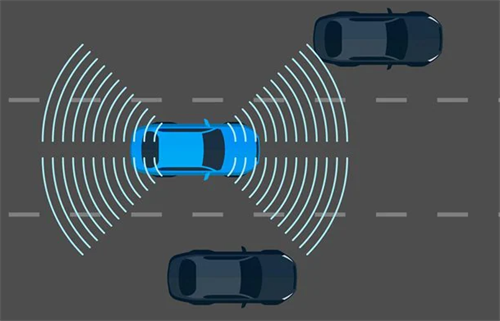
ISAC takes a different path: it turns the communication base station itself into a continuous radar. By leveraging the signal characteristics of 5G-A's higher frequency bands, as described in 3GPP Release 18 ISAC study specifications, the base station can track pedestrians, cyclists, and vehicles within a 200-meter range without adding any dedicated sensor hardware.
Is there a person crossing the street hidden behind that parked delivery truck? Your car did not see him, but the roadside base station did—and it pushed that information to you before a collision risk even materialized.
Taken individually, each of these technologies reads like a lab story. When they are assembled into a single city-scale commercial network, they stop being stories.
3. Basements, tunnels, and the middle of nowhere—how the old problem of losing connection gets addressed
Anyone who has driven through a long tunnel or circled two levels down in an underground parking garage understands: the moment the signal vanishes, all "intelligence" becomes vapor.
In February 2026, the 5GAA held a road test in Sacramento and included a demonstration that sounded like science fiction. BMW, HARMAN, Qualcomm, Viasat, and Fraunhofer jointly showcased Non-Terrestrial Network (NTN) satellite communication, as detailed in the 5GAA press release published on February 12, 2026. A test vehicle driving in a simulated remote-area scenario completed a two-way real-time voice call over narrowband IoT.
During the same road test, Audi, Autocrypt, and Qualcomm also demonstrated roadside tolling and safety warnings based on C-V2X Direct in the 5.9 GHz band.
The direction this points toward is clear. In the 5G-A era, a vehicle's communication chain no longer hangs on a single thread. The cellular network covers the ground. Satellites cover deserts and dead zones. 5.9 GHz direct communication handles urgent car-to-car exchanges.
Tie three ropes together, and you can still hold on if one snaps. Three levels underground with no view of the sky? The terrestrial base station signal can still penetrate. A collision risk between two cars? It requires no base station at all—the handshake happens directly in the air. This is what "coverage" finally means.
From "demonstration roads" to "real roads"—the leap V2X has been waiting twenty years for
1. 330 cities have already laid the network foundation—roads are turning digital
Having the technology is one thing; you need the network first.
On April 21, China's Ministry of Industry and Information Technology released a set of figures at a State Council press briefing (source: official transcript published on the MIIT website, April 21, 2026): as of the end of March 2026, the country had 4.958 million 5G base stations, and 5G-A covered 330 cities. Continuous network coverage had been achieved along 654,000 kilometers of highways and railways, as well as across 316 metro lines.
Spokesperson Xie Cun stated that the next step is to "accelerate large-scale commercial deployment of 5G-A" and push the "signal upgrade" initiative deeper.
During the same quarter, the first batch of 5G-A commercial network slices targeting intelligent transportation also appeared in the UK, Germany, and Japan, as reported by operators BT Group, Deutsche Telekom, and SoftBank in their respective Q1 2026 operational updates. The data pipeline connecting roadside cameras, radar, and cloud-based decision-making systems is shifting from "lab-only dedicated lines" to "public infrastructure."
2. The "cloud brain" is no longer a slide deck—shared road information goes from demo to daily life
The purpose of building this network is to let cars and roads speak the same language.
At the Sacramento road test, Aptiv and Wind River jointly demonstrated a solution built on Verizon's edge computing platform, as described in their joint press release dated February 12, 2026. Sensor data from one vehicle was uploaded in real time to a roadside edge server, which then distributed it to other connected vehicles nearby.
In another demo, HARMAN, Miovision, and Qualcomm showed how an AI-powered roadside perception system could use C-V2X direct communication to push the position and trajectory of unconnected "non-cooperative vehicles" to connected cars (source: 5GAA Sacramento road test press release, February 12, 2026).
The core idea behind this architecture is straightforward: your car no longer relies solely on its own eyes. A vehicle a kilometer ahead makes an emergency stop. That event is uploaded to the edge cloud, and within tens of milliseconds, every car behind receives a warning. You do not brake because you see the taillights of the car in front of you light up—you already knew what was happening before you could see anything.
3. Where the hard bones still are—let's be honest
But we need to pour a little cold water on the enthusiasm.
As of April 2026, more than 340 operators worldwide have launched commercial 5G networks, but only slightly more than 120 have fully deployed a 5G SA core network—the prerequisite for 5G-A (source: Global mobile Suppliers Association, 5G Market Snapshot, April 2026).
The density of roadside sensing units varies enormously from one city to another, and even from one district to another. The most stubborn problem remains language unification. Safety message formats, certificate systems, and identity authentication for V2X are still stuck in a tug-of-war between different automakers and equipment vendors.
As the 5GAA noted in its February 2026 Sacramento road test summary, the "common language" for V2X has not yet been fully standardized across all participating manufacturers.
How 5G-A affects your car-buying decision today and your driving experience tomorrow
1. The gap between "it works" and "it works well"—what is still missing
At Auto China 2026 in Beijing this April, multiple automakers put L3 conditional autonomous driving commercial timelines on the table, as widely reported by Reuters and the official show press center in April 2026. End-to-end large models and mapless urban NOA are shifting from high-margin options to standard equipment.
But in the eyes of engineers, this very fact signals that the potential of standalone vehicle intelligence has been pushed close to its limit. The next percentage points of performance improvement are much more likely to happen in the cloud and at the roadside, not on the chips inside the car.
The technology roadmap released by the 5GAA earlier this year in its white paper Mobilizing the Future: Roadmap for C-V2X Deployment* marks 2026 as the node for "full-scale 5G-V2X deployment."
There is a plain-language way to understand this shift: yesterday, when you bought a car, you only needed to look at the car itself. Tomorrow, you will also need to ask whether this car can understand the road it will be driving on.
2. Three questions you most need to figure out when choosing a car
Question one: Will the connectivity of a car I buy today be obsolete in two years?
Quectel's AR588MA module had already completed engineering integration with several major automakers by the first quarter of 2026, as disclosed in the company's Q1 2026 product update. A vehicle equipped with a module compliant with 3GPP Release 18 can ride through at least the next five to six years of network evolution.
Flip the lens: models that are being cleared out before this upgrade wave, carrying only basic 4G/5G modules, will show a noticeable gap in safety experience in 5G-A-covered cities within two years.
Question two: When can I actually use these features?
In the near term, the first thing to land is not autonomous driving; it is safety warnings. The real-time traffic signal push and road hazard alerts demonstrated in the Sacramento test are expected to roll out first in major cities across North America and Asia between 2026 and 2027, according to deployment timelines shared by 5GAA members at the February 2026 road test.
The sensor data cloud-sharing scheme validated by Aptiv and Wind River will also be delivered via OTA updates to certain premium battery-electric models within the next 12 to 18 months, as indicated in their joint press release.
Question three: What should I look for on the spec sheet?
A simple rule of thumb: check whether the car carries both cellular C-V2X and 5.9 GHz direct communication capabilities. Having only cellular means you may go blind in a tunnel. Having only direct communication means you cannot reach the cloud.
Genuine 5G-A V2X should be a three-mode full-chain solution: cellular + direct + satellite. When you read the spec sheet, if the V2X entry says nothing more than "connected car," mentions no 5.9 GHz band, and includes no mention of C-V2X protocol support, what you are most likely getting is basic remote control and OTA. Those are two different things entirely.
The destination is not a perfect car. It is making the road a little safer.
At its core, the roll-out of 5G-A is not a story about a car's IQ competition. It is about the entire transportation system finally starting to grow a nervous system.
Once the cellular plus C-V2X technology path is unified—a process the 5GAA is actively driving through its 2026 interoperability testing program—heterogeneous traffic will have a real chance to coordinate for the first time. Bus priority green lights, signal pre-conditioning for an ambulance crossing an intersection, rear-vehicle pre-deceleration when a car ahead slams the brakes—all of these scenarios are technically feasible now.
What they still need is time, coverage density, and the matching regulatory framework.
Meanwhile, organizations like the 5GAA are already laying the groundwork for 6G standards. Around 2030, according to ITU 6G vision documents, communication latency will be squeezed to sub-millisecond levels, and the road's collective reflex arc will shorten once again.
But even the most optimistic forecasts acknowledge that we are still far from "tossing the steering wheel aside and taking a nap." Roadside units cannot be installed on every rural lane. Extreme snowstorms will cause serious degradation even for base-station-grade ISAC radar. Satellite signals will be intermittent in urban canyons.
V2X is a safety redundancy, not a replacement. A properly engineered production car must still be capable of bringing itself to a safe stop entirely on its own, regardless of whether a network is present. There is no room for negotiation on that point.
Looking ahead from 2026 over the next five years, the auto industry is rounding a corner. It is moving from a race to pile on more perception hardware to a race to build more robust communication redundancy.
Translating this shift into plain terms is actually quite simple: it means that through every blind curve and hidden intersection you navigate on your daily commute, the road and the vehicles on it can, collectively, help you block one more loss of control and avoid one more collision.
Making the road just a little bit safer—that is what 5G-A means for autonomous driving in its most basic and honest sense.
FAQ
Q1: My phone is still on 5G. Does 5G-A affect which car I should buy?
5G-A is an evolution of existing 5G. Your phone will continue to work as normal. What you should watch for when buying a car is whether "V2X communication" and "C-V2X" are clearly noted on the spec sheet. That determines whether the vehicle will be able to plug into city-scale V2X safety warning systems in the future.
Q2: If I buy a car without 5G-A capability, will it soon become obsolete?
Not in the short term. Today's driver-assistance systems still rely overwhelmingly on standalone vehicle intelligence; 5G-A V2X serves as a safety redundancy. However, if you plan to keep the car for five years or more and your commute is mostly on highways and elevated roads, budget permitting, give priority to a model that supports V2X direct communication and cellular C-V2X. It can continue to gain OTA safety upgrades as urban digital road infrastructure gets built out.
Q3: When will Level 4 autonomous driving become widespread?
The industry consensus, as reflected in 5GAA deployment roadmaps and major automaker public statements at Auto China 2026, is that urban-road Level 4 requires several preconditions to be met simultaneously: roadside sensing unit coverage exceeding 80%, and network latency stably under 10 milliseconds, among others. Even though individual technology pieces are now proven, the broader infrastructure and regulatory framework will need a few more years to mature. It remains some distance away from most people's everyday driving scenarios.
Q4: Does 5G-A consume much power? Will it affect an EV's range?
The power consumption of an automotive communication module is negligible within the overall electrical load of a vehicle. According to Quectel's AR588MA product specifications, the latest generation of automotive-grade 5G-A modules is deeply integrated into the vehicle's power management system; the impact on driving range can be effectively ignored.
Q5: What is the progress of V2X outside of China?
The 5GAA is leading global V2X standardization and interoperability testing. The Sacramento road test in February 2026 brought together major players including Audi, BMW, Volkswagen, Qualcomm, Verizon, and Viasat. During the same period, the 5GAA also completed a series of satellite communication and V2X safety coordination tests in the Nordic region, as announced in the association's February 2026 press materials. Both the U.S. and European markets are accelerating their push.
References
[1] 5G Automotive Association. (2026, February 12). 5GAA demonstrates the future of driving in the U.S.: From tolling to satellite connectivity [Press release].
[2] 5G Automotive Association. (2026). Mobilizing the future: 5GAA roadmap for C-V2X deployment [White paper].
[3] Aptiv PLC & Wind River Systems, Inc. (2026, February 12). Aptiv and Wind River showcase network V2X solution for sensor sharing leveraging Verizon's connected driving platform [Press release].
[4] SoftBank Corp., Ericsson, & Qualcomm Technologies, Inc. (2026, January 15). Field trial of 5G and 5G-A capabilities including L4S on commercial 5G SA network [Press release].
[5] Global mobile Suppliers Association. (2026, April). 5G Market Snapshot.
About the Author
Michael J. Reynolds is an independent auto and smart mobility analyst based in Detroit. Over the past decade, he has written for numerous automotive and tech publications across North America and Europe, consistently focusing on how autonomous driving, vehicle connectivity, and new energy technologies tangibly reshape the daily driving experience. He has long-term hands-on testing history with production vehicles equipped with L2+/L3 driver-assistance systems and insists on replacing hype with verifiable engineering facts.
Disclaimer
This article represents the author's independent analysis based on publicly available information and the state of technology as of April 2026. It does not constitute investment advice or vehicle purchase guidance. All corporate information and technical data cited herein are sourced from public reports and official announcements. Specific vehicle functions and performance are subject to each manufacturer's actual delivery and official specifications. V2X and autonomous driving technologies continue to evolve; the views expressed in this article may change as technology and policies shift.
Related Articles
What Exactly Is V2X Vehicle-to-Everything? Can a “God’s-Eye View” Help Vehicles Avoid Dart-Out Crashes and Chain Rear-End Collisions?https://zhongtaiserver.zhongtongtec.com/storage/WebsiteAdmin/view/2026-04/autotriad.com/driving/what-exactly-is-v2x-vehicletoeverything-can-a-godseye-view-help-vehicles-avoid-dartout-crashes-and-chain-rearend-collisions.html
Recommended for you: