Can Solid-State Batteries Really Make EVs Lighter Than Gas Cars?
Author: Mark Stevenson | Last Updated: April 22, 2026 | Reading Time: About 9 minutes
Why Are Today's EVs So Much Heavier Than Gas Cars?
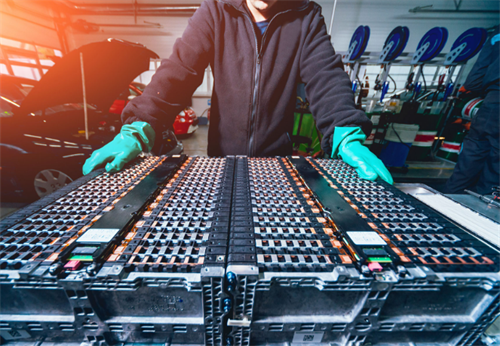
Current mainstream EV battery packs typically weigh between 350 and 600 kg. That accounts for about 20% to 30% of the total vehicle weight.
Compare that to a gas car. A 15-gallon (about 57-liter) fuel tank weighs only about 41 kg when full. Yet it delivers roughly 480 km of range. An EV needs a battery pack of over 450 kg to match that range.
This gap gets even wider with large SUVs. The gasoline Cadillac Escalade weighs about 2,634 to 2,807 kg. The electric Escalade IQ? Over 4,082 kg (source: General Motors official specifications for 2025 Cadillac Escalade and 2025 Cadillac Escalade IQ, published on cadillac.com). The battery alone adds nearly 1,360 kg.
And here's the catch: a heavier body needs stronger chassis, suspension, and braking systems. That adds even more weight. It's a "weight spiral."
The Hidden Advantage of Weight Distribution
But extra weight isn't all bad. Batteries sit flat under the floor. This gives EVs an extremely low center of gravity. The front-to-rear weight distribution is close to 50:50.
Gas car engineers work hard to achieve this. The BMW 3 Series, for example, pushes the engine as far back as possible. The transmission even extends into the cabin floor. All that effort just to get close to what EVs get naturally. So while EVs are heavier overall, they often handle corners better than gas cars in the same class.
Still, physics is physics. A 2.5-tonne EV, no matter how low its center of gravity, pushes the suspension hard during emergency lane changes or fast cornering. That's why EV makers pile on hardware: double wishbone suspension, air suspension, active anti-roll bars. They use brute-force engineering to compensate for the laws of physics.
What Can Solid-State Batteries Change?
More Than Just Lighter Cells
The core advantage of solid-state batteries is energy density. Current mainstream NMC lithium-ion batteries have about 200 to 325 Wh/kg. Solid-state targets 500 Wh/kg or higher. That means the cells themselves can be 30% to 50% lighter for the same capacity.
But the real weight savings go further.
In 2025, UK solid-state battery company Ilika and Balance Batteries published a modeling study. They based it on the Hyundai Ioniq 5's 84.1 kWh battery pack. Switching to solid-state could cut over 100 kg from the entire pack (source: Ilika plc and Balance Batteries, "Model of Solid State Battery Pack Shows Weight and Cost Benefits Compared to Lithium-Ion," official publication, 2025).
This isn't just from lighter cells. It also comes from simpler cooling systems, thinner insulation, and less structural reinforcement.
More importantly, solid-state batteries are inherently safer. There's no flammable liquid electrolyte. So you can remove some thermal runaway protection components. That alone saves about 6.6 kg (source: Ilika and Balance Batteries modeling study, 2025).
Lower Battery Pack Height
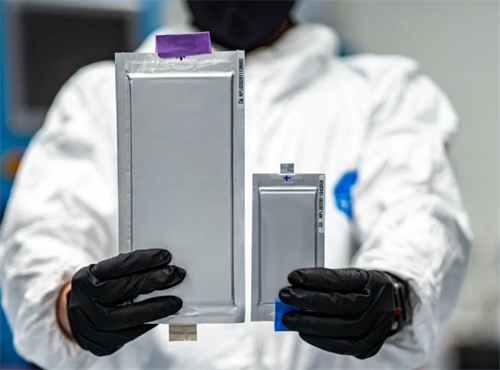
Another underrated benefit: solid-state batteries can be thinner.
Toyota's current bZ4X battery pack is 150 mm tall including the casing. The company plans to compress the next generation to 120 mm. High-performance sports models could go as low as 100 mm (source: Toyota Motor Corporation, solid-state battery technical briefing, 2023, as reported by IEEE Spectrum, "Toyota Teases Solid-State Batteries in 2027").
That 30 to 50 mm difference seems small. But it matters for overall design. Lower roof lines become possible. Drag coefficient (CdA) drops. Range improves further.
What does this mean for everyday drivers? In a mid-size SUV, a thinner battery pack lowers the floor. Rear passengers get more legroom. Or manufacturers can design more aerodynamic rooflines without sacrificing headroom.
The Key Question: Can Solid-State Batteries Match Gas Car Weight?
How Big Is the Gap?
The short answer: not soon, but the gap will shrink significantly.
Current electric SUVs weigh 25% to 40% more than gas equivalents. Solid-state batteries can cut battery system weight by about 16% at the cell level. But total vehicle weight drops by only about 10% to 15%.
Take a 2,000 kg mid-size electric SUV. Solid-state might save 200 to 300 kg. But the gas equivalent weighs around 1,700 kg. The EV still carries an extra 150 to 250 kg.
Here's a concrete example. The Ford F-150 Lightning weighs about 6,015 lbs (roughly 2,728 kg). The standard F-150? About 4,465 lbs (around 2,025 kg) (source: Ford Motor Company official specifications for 2025 F-150 and 2025 F-150 Lightning, ford.com). That's a 703 kg gap.
Even if solid-state cuts battery weight by 40%, it only fills about half that gap. In other words, electric trucks will still outweigh gas trucks in the solid-state era. The difference just goes from "very obvious" to "acceptable."
The Threshold for True Parity
To actually match gas car weight, energy density needs to break 600 Wh/kg.
Germany's Fraunhofer IWS is developing solid-state lithium-sulfur batteries that could hit this target (source: Fraunhofer IWS, "Researchers Develop Lighter Solid-State Batteries," reported by E&M powernews, 2025). But commercialization won't happen until after 2030. Until then, solid-state batteries will narrow the gap. They won't eliminate it.
A more realistic scenario: solid-state makes EVs better than gas cars in total cost of ownership and driving experience. Not in raw weight numbers. After all, for most consumers, 10-minute fast charging, 1,000 km range, and lower maintenance costs matter more than shaving 100 kg off the curb weight.
Production Timeline — When Can Consumers Actually Buy One?
2027 to 2028: The First Real Milestone
Toyota has confirmed solid-state battery mass production for 2027 to 2028. The first models will likely be high-end Lexus vehicles (source: Toyota Motor Corporation, solid-state battery investment announcement, 2023).
Japan's Idemitsu Kosan is building a pilot plant for hundreds of tonnes of solid electrolyte per year. Production starts in late 2027 (source: Idemitsu Kosan press release, "Solid Electrolyte Pilot Plant Construction Plan," 2025).
Mercedes has also tested a solid-state EQS prototype. Range exceeded 1,200 km (source: Mercedes-Benz Group, "Solid-State Battery Prototype Testing Results," press release, 2025).
But these early products will almost certainly target the luxury market. Toyota's initial capacity supports only tens of thousands of units per year. Prices are expected to fall in the $80,000 to $100,000 range. This means solid-state in 2027 to 2028 is more of a "technology showcase" than "mass-market reality."
True Mass Adoption Still Waits
Taipei-based market research firm TrendForce analyzed the timeline. Solid-state battery production won't reach GWh scale until 2027. Costs won't drop to about 1 yuan/Wh (roughly $0.14/Wh) until 2030. By 2035, they project 0.6 to 0.7 yuan/Wh (source: TrendForce, "Solid-State Battery Market Outlook," 2025).
For comparison, mainstream lithium-ion batteries already cost under $0.10/Wh.
Goldman Sachs reported in 2024 that the solid-state mass commercialization timeline "has been pushed to the latter half of this decade" (source: Goldman Sachs Equity Research, "Electric Vehicle Battery Prices Are Expected to Fall Almost 50% by 2026," 2024). The leap from lab to factory is harder than expected.
Former CATL chief technology officer Bob Galyen put it bluntly. Solid-state battery costs sit roughly where conventional lithium-ion was a decade ago. And "most solid-state battery companies fail at least three of the five golden rules: safety, performance, longevity, cost, and environmental impact" (source: Bob Galyen, interview with IEEE Spectrum, "Solid-State Batteries Could Face 'Production Hell'," 2024).
The Bridge: Semi-Solid Batteries
Before "full solid-state" arrives, semi-solid batteries are already here. From 2025 to 2026, semi-solid models hit the market. SAIC's MG4 is one example. Semi-solid batteries offer about 15% to 20% higher energy density than conventional lithium-ion. They're also easier and cheaper to manufacture.
For consumers not chasing cutting-edge tech, semi-solid battery vehicles may be the most practical choice between 2026 and 2028.
What This Means for Everyday Drivers
Range and Efficiency Matter More
The most noticeable impact of solid-state batteries for daily driving might not be weight. It might be range and charging speed.
Toyota claims its solid-state prototype can charge from 10% to 80% in 10 minutes (source: Toyota Motor Corporation, solid-state battery technical briefing, 2023). That means road trip charging stops shrink from 30 to 40 minutes down to a coffee break.
Lower battery pack height also improves interior space. For families, a few extra centimeters of rear legroom or a few dozen extra liters of trunk space may matter more than 100 kg of weight savings.
The Hidden Benefits of Lighter Weight
A lighter body means shorter braking distances and sharper handling. Take the Hyundai Ioniq 5. If the battery pack sheds over 100 kg, the braking system faces less strain during emergency stops. Brake pad and tire wear drops. For drivers who regularly tackle mountain roads or city traffic, these "hidden gains" add up over time.
Also, with less weight to support, suspension systems can be tuned for comfort. They won't need to sacrifice ride quality just to carry a heavy battery.
Technical Challenges and Realistic Expectations
Production Bottlenecks Remain
Solid-state faces challenges beyond cost. Solid-solid interfaces have limited contact area. They need constant pressure of 10 to 20 MPa to maintain performance. This demands entirely new battery pack mechanical designs.
Sulfide electrolytes are extremely sensitive to moisture. Production environments need dew points below -70°C. That drives up manufacturing difficulty and energy consumption.
Another underestimated issue: validation cycles. Galyen notes that from factory construction to real-world road validation, the whole process can take over seven years (source: Bob Galyen, IEEE Spectrum interview, 2024). Automakers won't mass-produce a new technology without thorough validation.
Consumers Should Adjust Expectations
If you're considering an EV purchase in 2026 or 2027, don't postpone indefinitely waiting for solid-state.
Current lithium-ion technology is mature. Prices keep falling. Goldman Sachs expects 2026 battery prices to drop nearly 50% from 2024 levels (source: Goldman Sachs Equity Research, 2024). Solid-state's high early prices and limited production mean it will remain a "toy for the few" for the next three to five years.
A smarter strategy: if you need a car now, pick a current EV with sufficient range and good charging network coverage. If you plan to replace your car after 2028, then seriously consider solid-state options.
FAQ
Q1: Will solid-state EVs be lighter than equivalent gas cars?
Not in the near term. Solid-state should cut EV weight by 10% to 15%. But gas equivalents will likely still be 100 to 200 kg lighter. True weight parity needs energy density above 600 Wh/kg. That probably won't arrive until after 2030.
Q2: When can I actually buy a solid-state EV?
2027 to 2028 brings first production models (Toyota Lexus, Mercedes, etc.). But these will be high-end, low-volume vehicles. Mass-market models likely won't arrive until after 2030. Reasonable pricing may wait until 2035.
Q3: Besides weight, what else do solid-state batteries offer?
They're inherently safer (no flammable liquid electrolyte). They charge faster (10% to 80% in 10 minutes, per Toyota's 2023 technical briefing). They last longer (over 90% capacity retention after 2,000 cycles). They deliver longer range (over 1,000 km). Lower pack height also improves interior space.
Q4: Why is solid-state so hard to mass-produce?
Making solid electrolytes requires entirely new processes. Interface contact issues create higher internal resistance. Lithium metal anode dendrite problems persist under high current. Sulfide electrolytes are extremely moisture-sensitive, requiring strict production environments. From factory build to road validation can take over seven years (source: Bob Galyen, IEEE Spectrum, 2024).
Q5: Are current EVs still worth buying?
Yes. Current lithium-ion technology is mature. Battery prices keep falling. If you plan to replace your car within 5 to 8 years, existing technology fully meets your needs. If you plan to keep a car for over 10 years, you might wait for post-2028 solid-state options.
References
[1] Ilika & Balance Batteries. (2025). Model of Solid State Battery Pack Shows Weight and Cost Benefits Compared to Lithium-Ion. Retrieved from Ilika plc official publication.
[2] Fraunhofer IWS. (2025). Researchers develop lighter solid-state batteries. E&M powernews.
[3] IEEE Spectrum. (2023). Toyota Teases Solid-State Batteries in 2027.
[4] IEEE Spectrum. (2024). Solid-State Batteries Could Face "Production Hell".
[5] Goldman Sachs. (2024). Electric vehicle battery prices are expected to fall almost 50% by 2026.
About the Author
Mark Stevenson is a senior automotive technology editor and former battery technology columnist for Car and Driver magazine. With 15 years of automotive industry reporting experience, he focuses on electrification, new energy technology evaluation, and automotive market trend analysis. He is committed to providing objective, practical technical insights for everyday consumers.
Disclaimer
This article is based on publicly available industry information as of April 2026. It provides technology trend analysis, not purchase advice. Solid-state battery production timelines may shift due to technical breakthroughs or supply chain issues. Specific vehicle specifications, prices, and launch dates should be confirmed with official manufacturer announcements. The author and publishing platform assume no responsibility for vehicle purchase or investment decisions made based on this article.
Related Articles
1. How to Choose Between Battery Technologies (Solid-State / Semi-Solid / Niobium Battery / Whip Battery) for Purchasing New Energy Vehicles?https://zhongtaiserver.zhongtongtec.com/storage/WebsiteAdmin/view/2026-04/autotriad.com/driving/how-to-choose-between-battery-technologies-solidstate-semisolid-niobium-battery-whip-battery-for-purchasing-new-energy-vehicles.html
2. Why Solid-State Batteries Are the Final Piece of the Flying Car Puzzlehttps://zhongtaiserver.zhongtongtec.com/storage/WebsiteAdmin/view/2026-04/autotriad.com/driving/why-solidstate-batteries-are-the-final-piece-of-the-flying-car-puzzle.html
3.Can I Upgrade My EV to a Solid-State Battery Later?https://zhongtaiserver.zhongtongtec.com/storage/WebsiteAdmin/view/2026-04/autotriad.com/driving/can-i-upgrade-my-ev-to-a-solidstate-battery-later.html
Recommended for you: