Solid-State Batteries Are Less Likely to Catch Fire—Will Car Insurance Premiums Drop?

Author: David L. Hartwell, M.Eng.| Last updated: April 23, 2026 | Reading time: ~12 minutes
We are nearly four months into 2026. Solid-state battery news is shifting from lab headlines to actual purchase considerations.
Toyota has started pilot production in Aichi Prefecture (source: Toyota Motor Corp. press release, “All-Solid-State Battery Pilot Line Begins Operation,” February 2026). BMW has finished road testing the solid-state version of the i7 (source: BMW Group, “BMW i7 Solid-State Prototype Completes Validation Drives,” January 2026). Chery announced it will install solid-state batteries in the Exeed ES8 this year (source: Chery Automobile Co., “Solid-State Battery Mass Production Plan for Exeed ES8,” March 2026).
These updates are making EV owners and potential buyers ask a very practical question: if solid-state batteries are far safer than liquid ones, shouldn't my insurance premium go down once I drive a solid-state car?
The intuitive answer seems straightforward. A safer battery means fewer fires. Fewer fires mean fewer claims. Lower claims should mean cheaper insurance. But reality is much less direct than that. This article will walk through that logic step by step. We will look at how safe solid-state batteries really are, how insurance premiums are actually calculated, and the winding path that connects the two.
Part 1: Are Solid-State Batteries Really Less Likely to Catch Fire?
1.1 The Safety Advantage: Why Solid-State Is More Stable
The fundamental difference between solid-state and liquid lithium-ion batteries is the electrolyte. Liquid batteries use a flammable organic solvent. That solvent is the primary fuel in a thermal runaway event. If the battery shorts or overheats, the liquid electrolyte vaporizes, decomposes, and ignites. The whole process can spiral out of control in seconds.
Solid-state batteries replace that flammable liquid with a solid electrolyte. The solid material itself does not burn and does not leak. This physically removes the weakest link in the fire chain.
Because of this, solid-state batteries do have a wider safety margin. In extreme tests—nail penetration, crushing, overcharging—solid-state cells generally perform better than liquid ones. This is why nearly every automaker showcasing solid-state progress puts “safety” at the top of the list.
1.2 Realistic Risks: Why “Absolute Safety” Is a Misreading
But research emerging since 2025 is urging the industry to take a more measured view.
A team led by Mickael Dolle at the University of Montreal published a study revealing a previously overlooked risk. Lithium metal anodes can react violently with cathode materials through a thermite reaction. Even without liquid electrolyte present, the reaction between lithium and a charged cathode can release significant energy. The study measured values around -5.62 kJ/g, hotter than conventional thermite, with adiabatic temperatures reaching 2500°C (source: Bertrand, M., et al., “Are Solid State Batteries Non-Flammable?” presented at the Electrochemical Society Meeting, 2025; DOI: 10.1149/MA2025-015638mtgabs). That is enough to vaporize lithium and cause an explosion.
At the same time, researchers from General Motors presented findings at the 2025 MRS Spring Meeting. They focused on sulfide-based solid electrolytes—materials like β-Li₃PS₄ and Li₆PS₅Cl, which are leading candidates for commercialization. Their work showed these sulfides are combustible solids. When exposed to high-temperature oxidizing conditions, they release sulfur vapor below 300°C. That vapor is highly flammable and can auto-ignite into visible flame (source: Yersak, T., et al., “Flammability of Sulfide Solid-State Electrolytes β-Li₃PS₄ and Li₆PS₅Cl,” 2025 MRS Spring Meeting, EN07.10.01).
The takeaway is this: solid-state batteries are harder to push into thermal runaway, and the runaway event itself is slower and more manageable. But they are not inherently non-flammable. A useful analogy: a liquid lithium battery is like a can of gasoline. A solid-state battery is more like a damp log. The damp log is much harder to light. But put enough heat on it, and it will still burn.
1.3 2026 Production Update: When Will Solid-State Actually Arrive?
The solid-state battery race in 2026 is genuinely active. Chery plans to launch first on the Exeed ES8 (source: Chery, March 2026). Dongfeng Aeolus targets volume production in September (source: Dongfeng Motor Corp. investor day presentation, April 2026). Toyota’s pilot line in Aichi is operational (source: Toyota, February 2026). BMW’s i7 solid-state prototype has finished validation drives (source: BMW, January 2026).
But there is a big gap between “launching production” and “arriving in a typical owner’s garage.”
First, most batteries now entering production are actually semi-solid-state. They still use a small amount of liquid or gel electrolyte. The China Society of Automotive Engineers issued a standard in May 2025 that strictly defines a true all-solid-state battery as one where ion transport occurs entirely through solid media (source: China SAE Standard T/CSAE 365-2025, “Terms and Definitions for All-Solid-State Batteries,” effective May 2025).
Second, even semi-solid batteries cost two to three times more than liquid ones (source: TrendForce, “Semi-Solid-State Battery Cost Analysis,” Q1 2026). Early vehicles equipped with them will likely carry a 30 to 40 percent price premium over comparable EVs (source: BloombergNEF, “Solid-State Battery Cost Outlook,” February 2026).
The industry consensus is that 2026 and 2027 are small-scale, high-end trial phases. Mass adoption is not expected until around 2030 (source: IEA Global EV Outlook 2026, technology readiness assessment).
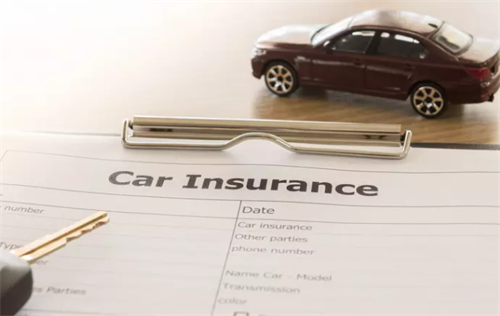
Part 2: How Are Your Insurance Premiums Actually Calculated?
To understand if solid-state batteries will change premiums, you first need to understand how premiums are set.
The formula for commercial auto insurance is not a mystery. Premium = Base Rate × No-Claim Discount Factor × Independent Pricing Coefficient.
Base Rate is tied to the vehicle model. Insurers assign a baseline rate to each model based on its price, repair costs, and historical claims data.
No-Claim Discount (NCD) Factor is linked directly to your driving record. Years without an accident lower the factor. Frequent claims raise it significantly. This is the variable drivers have the most control over.
Independent Pricing Coefficient is the adjustment knob insurers use to reflect model-specific risk and driver-specific risk. A lower coefficient means a lower premium.
In March 2026, the allowed range for the independent pricing coefficient on new energy vehicles was expanded. The previous range was 0.6 to 1.4. The new range is 0.55 to 1.45 (source: China Banking and Insurance Regulatory Commission, “Notice on Adjusting NEV Insurance Pricing,” March 2026). This means drivers with clean records—three or more years without claims and no serious traffic violations—could see up to an 8.33 percent reduction. At the same time, “battery-as-a-service” insurance models are being tested in select cities. For vehicles with swappable batteries, the body and battery are insured separately. This has lowered premiums by an average of 30 to 50 percent (source: China Insurance Association, “BaaS Insurance Pilot Results,” February 2026).
These policy shifts point to a clear trend. The insurance industry is trying to make pricing more accurate and fairer. But accuracy depends on real, measurable data, not on technology promises.
Part 3: How Much Does Battery Safety Actually Matter in Premium Pricing?
3.1 The Core Factors That Drive Premiums
From an actuary’s perspective, the factors that determine a vehicle’s premium are more concrete than most drivers realize. The main variables are:
Parts-to-Whole Ratio: This is the total cost of replacement parts divided by the vehicle’s price. Recent data from the China Insurance Research Institute shows that the battery pack alone accounts for an average of 50.96 percent of the vehicle’s value for 59 pure EV models (source: China Insurance Research Institute, “Auto Insurance Parts Ratio Report,” Q4 2025). Replacing the battery on a $30,000 EV could cost over $15,000. That level of repair cost directly inflates the base premium.
Claim Frequency and Severity: This is the insurer’s ledger. If a model has a high claim rate and high average payout, insurers must raise the pricing coefficient to cover the risk.
Driver History: This is where the NCD factor plays its role.
Vehicle Use: Personal versus commercial use creates a large premium gap.
Industry data shows new energy vehicle insurance premiums are generally 15 to 20 percent higher than comparable gasoline cars. In the US market, EV premiums run 20 to 50 percent higher (source: SoFi, “Are Electric Cars More Expensive to Insure?” 2026). In the UK, average annual EV premiums are about £572, compared to £524 for diesel and £497 for petrol (source: MoneySuperMarket, “Compare Electric Car Insurance Quotes,” 2026). The root cause is not “does the battery catch fire.” It is that the repair cost structure is entirely different. EV collision repairs cost about 30 percent more and require nearly twice the labor hours (source: CCC Intelligent Solutions, “EV vs. ICE Repair Cost Comparison,” Q1 2026).
3.2 The Real Path from Battery Safety to Lower Premiums
Battery type does influence a model’s risk rating. But it is just one variable among many.
In theory, the path from “safer battery” to “lower premium” looks like this: improved safety → fewer fire claims in actual accidents → insurers collect enough data to verify the trend → risk models for that model are adjusted downward → premiums drop.
This chain has at least two major bottlenecks. The first is time. Insurers need at least two to three years of real-world claims data to build a reliable risk model for solid-state vehicles. Even if a solid-state car launches in 2026, insurers will not have the data to justify a pricing change until at least 2028 or 2029.
The second is repair economics. Even if the battery does not burn, it must still be repairable at a reasonable cost. Early solid-state packs may be complex and expensive to service, which could actually push repair costs higher in the short term.
We can look to the energy storage industry for a reference point. As battery safety ratings improved, insurance rates for storage systems dropped from an early range of 0.5 to 1.0 percent of insured value down to 0.2 to 0.3 percent (source: Willis Towers Watson, “Energy Storage Insurance Market Review,” 2024). That is a meaningful reduction. But it took several years to materialize.

Part 4: What Should an Average Driver Do Right Now?
Rather than waiting for solid-state batteries to deliver a future premium discount, focus on what you can control today.
First, do not delay a vehicle purchase just because premiums might drop later. The time between now, mass adoption, and insurance pricing response is measured in years. That time cost will far outweigh any potential premium savings.
Second, if you are buying an EV now, choose a model with a reasonable parts-to-whole ratio, a solid service network, and a strong safety reputation. This will have a much bigger impact on your insurance cost than whether the battery is solid-state.
Third, maintain a clean driving record and avoid claims. The No-Claim Discount can reduce your premium by 30 to 40 percent. That benefit is more direct and more predictable than any technology-driven change.
Fourth, if you are considering a vehicle with swappable batteries, check if “battery-as-a-service” insurance is available in your area. This is a real way to lower premiums today.
Fifth, pay attention to the expanded independent pricing coefficient range. Drivers with excellent records can now qualify for a coefficient as low as 0.55. Under the 2026 rules, this is a tangible path to savings.
Solid-state batteries are indeed safer than liquid lithium-ion batteries. But that safety advantage will not immediately lower your car insurance premium. Premiums are based on actuarial risk models. Updating those models requires data, time, and a supportive repair ecosystem.
Solid-state technology points in the right direction. Over the long term, it has the potential to fundamentally improve the loss profile of EVs and create conditions for lower premiums. But for the average driver in 2026, understanding how premiums are actually set is more valuable than waiting for the next battery breakthrough. Be a smart owner who understands the pricing model, and you will not be caught off guard by it.
FAQ
Q1: Once solid-state battery cars are available, will their premiums definitely be cheaper than current EVs?
A: Not necessarily. Premiums depend on many factors. Battery type is just one of them. Even if safety improves, if repair costs remain high or data is lacking, early premiums may not be low.
Q2: Should I wait to buy a car until solid-state batteries are available?
A: Waiting solely for lower insurance premiums is not recommended. Mass adoption is expected around 2030. The time spent waiting will cost more than any likely premium difference.
Q3: If my current EV catches fire, does insurance cover it?
A: Under 2026 regulations, fire caused by battery defects or electrical system faults is covered under the main vehicle damage policy. However, fires caused by unauthorized electrical modifications may not be covered.
Q4: How does battery-as-a-service insurance work for swappable battery cars?
A: This model insures the vehicle body and the battery separately. Since the body’s insured value is much lower, the premium drops accordingly. In pilot cities, this has reduced premiums by an average of 30 to 50 percent (source: China Insurance Association, February 2026).
Q5: When will insurers start offering discounts for solid-state battery vehicles?
A: Insurers need at least two to three years of real-world claims data to build reliable risk models. Noticeable premium changes are unlikely before 2028 or 2029.
References
[1] Bertrand, M., et al. (2025). Are Solid State Batteries Non-Flammable? The Electrochemical Society, MA2025-01 638. DOI: 10.1149/MA2025-015638mtgabs.
[2] Yersak, T., et al. (2025). Flammability of Sulfide Solid-State Electrolytes β-Li₃PS₄ and Li₆PS₅Cl. 2025 MRS Spring Meeting & Exhibit, EN07.10.01.
[3] MoneySuperMarket. (2026). Compare Electric Car Insurance Quotes.
[4] SoFi. (2026). Are Electric Cars More Expensive to Insure?
[5] CleanTechnica. (2026). Solid-State Battery Milestones Appear Encouraging For Near Future.
[6] Toyota Motor Corp. (2026, February). All-Solid-State Battery Pilot Line Begins Operation [Press release].
[7] BMW Group. (2026, January). BMW i7 Solid-State Prototype Completes Validation Drives [Press release].
[8] Chery Automobile Co. (2026, March). Solid-State Battery Mass Production Plan for Exeed ES8.
[9] China SAE Standard T/CSAE 365-2025. (2025, May). Terms and Definitions for All-Solid-State Batteries.
[10] TrendForce. (2026, Q1). Semi-Solid-State Battery Cost Analysis.
[11] BloombergNEF. (2026, February). Solid-State Battery Cost Outlook.
[12] IEA Global EV Outlook 2026.
[13] China Banking and Insurance Regulatory Commission. (2026, March). Notice on Adjusting NEV Insurance Pricing.
[14] China Insurance Association. (2026, February). BaaS Insurance Pilot Results.
[15] China Insurance Research Institute. (2025, Q4). Auto Insurance Parts Ratio Report.
[16] CCC Intelligent Solutions. (2026, Q1). EV vs. ICE Repair Cost Comparison.
[17] Willis Towers Watson. (2024). Energy Storage Insurance Market Review.
About the author:
David L. Hartwell holds a Master of Engineering in Automotive Systems from the University of Michigan. He spent over a decade as a powertrain validation engineer at a major Detroit automaker before transitioning to independent technology analysis. His work focuses on the real-world impact of emerging vehicle technologies on ownership costs.
Disclaimer
This article is for informational purposes only and does not constitute insurance purchasing advice, investment advice, or vehicle purchasing guidance. Data, regulations, and industry trends cited are current as of April 23, 2026. Subsequent policy changes, technological advances, or market shifts may affect the conclusions presented here. Actual insurance premiums vary by model, region, insurer, and individual driving record. Please refer to official quotes from your insurance provider. The author assumes no responsibility for any direct or indirect consequences arising from the use of this information. The views expressed are those of the author and do not represent any affiliated institution.
Related Articles
1.Solid-State Battery Era Arrives — Will My Electric Vehicle Retain Its Value?https://zhongtaiserver.zhongtongtec.com/storage/WebsiteAdmin/view/2026-04/autotriad.com/driving/solidstate-battery-era-arrives-will-my-electric-vehicle-retain-its-value.html
2.Can I Upgrade My EV to a Solid-State Battery Later?https://zhongtaiserver.zhongtongtec.com/storage/WebsiteAdmin/view/2026-04/autotriad.com/driving/can-i-upgrade-my-ev-to-a-solidstate-battery-later.html
Recommended for you: