Why Solid-State Batteries Are the Final Piece of the Flying Car Puzzle
Author: James H. Patterson | Aerospace Technology Analyst
Last updated: April 22, 2026
Reading time: 10 minutes
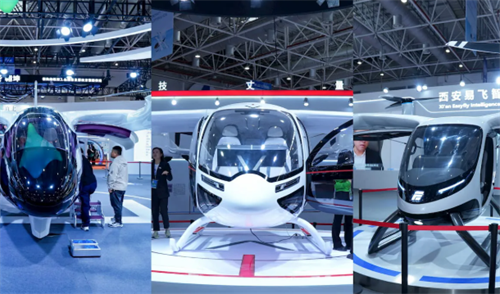
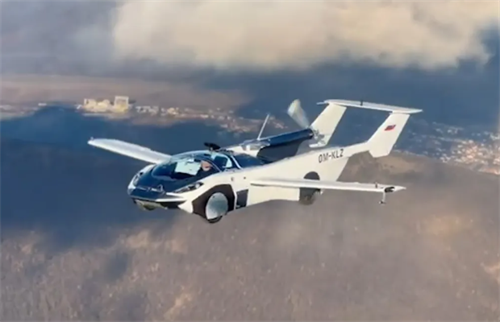
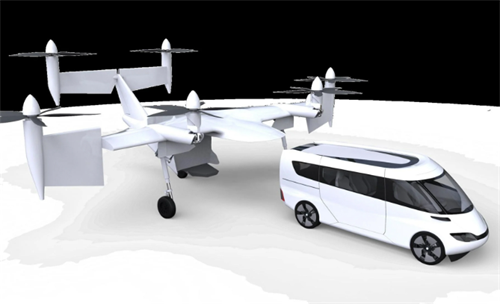
On March 25, 2026, Chinese battery maker CALB achieved a milestone at its Chengdu plant. The company began mass production of specialized batteries for XPeng AeroHT's "Land Aircraft Carrier" flying car. These cells deliver 360 Wh/kg energy density and a 25C maximum discharge rate. They also passed a 15.2-meter free-fall drop test without catching fire or exploding. Global pre-orders for the aircraft have now surpassed 7,000 units, and the Guangzhou factory is rolling one vehicle off the line every 30 minutes (source: CALB official press release, "Mass Production of eVTOL Specialty Cells Begins," March 25, 2026; XPeng AeroHT, "Land Aircraft Carrier Pre-Order and Production Update," April 2026).
This news is exciting, but it raises a fundamental question. Why are flying cars only now approaching mass production? Over the past decade, we have heard many promises about "air taxis." Few have actually materialized. The answer has little to do with aerodynamics or electric motor technology. Those fields are already mature. The real bottleneck has been the battery.
More precisely, solid-state batteries are solving this problem. This is not a nice-to-have upgrade. It is the final piece that turns a flying car from "something that can take off" into "something that can operate profitably."
The eVTOL Battery Dilemma — Why Conventional Lithium-Ion Falls Short
The "Impossible Triangle" of Energy, Power, and Safety
The battery demands of an eVTOL are on a completely different level from those of an electric car. You can use today's EV batteries to drive a Model Y for 300 miles. But the same technology struggles to power a four-passenger eVTOL safely through a single intercity flight.
The first hurdle is energy density. Aviation regulation DO-311A requires battery pack-level energy density of at least 350 Wh/kg (source: RTCA DO-311A, "Minimum Operational Performance Standards for Rechargeable Lithium Battery Systems," 2021). The best commercial nickel-based cylindrical cells currently achieve around 242 Wh/kg. That barely meets the threshold on paper, but falls short when safety margins are factored in.
The second hurdle is power density. During vertical takeoff and landing, an eVTOL must sustain a continuous output of 3C to 8C. An electric car typically operates between 0.1C and 0.5C. Take Joby's aircraft as an example. Its takeoff and landing discharge rate reaches 10C, which places enormous thermodynamic stress on the battery chemistry. More critically, emergency power requirements can spike to 20C or even above 30C. The battery must deliver stable power under extreme conditions. Liquid-electrolyte cells are highly prone to thermal runaway at such high rates.
The third hurdle is safety. If a car battery catches fire, you can pull over and get out. If an aircraft battery catches fire mid-flight, there is almost no room for recovery. An eVTOL battery system must pass 32 safety tests, including nail penetration, overcharge, and crush tests. The battery pack must withstand thermal runaway for 10 minutes without igniting. As we approach the critical certification window in 2026, these standards are non-negotiable.
These three requirements form an "impossible triangle." Pursuing high energy density often sacrifices safety. Pursuing high power often reduces range. This is why flying cars have been discussed for years but have yet to enter large-scale commercial service.
How Solid-State Batteries Break the Triangle
NASA SABERS: 500 Wh/kg Opens a New World
In 2021, NASA launched a project called SABERS, which stands for Solid-state Architecture Batteries for Enhanced Rechargeability and Safety. The program was designed specifically to develop next-generation solid-state battery technology for electric aviation. The results have been striking.
SABERS uses a selenium-sulfur composite cathode paired with a lithium metal anode. This configuration achieved an energy density of 500 Wh/kg for the first time. That is twice the level of conventional lithium-ion cells and directly crosses the "energy density threshold" for eVTOL commercialization.
More convincingly, NASA sent 2.1Ah solid-state cells to the Japanese "Kibo" exposed platform on the International Space Station. After 434 days in orbit and 562 charge-discharge cycles, the capacity fade was almost negligible (source: NASA SABERS Project, "On-Orbit Battery Test Results," NASA TechPort, updated January 2026).
On the safety front, NASA's Glenn Research Center tested the selenium-sulfur cells for 100,000 cycles. The cells showed no thermal runaway under nail penetration, crushing, or temperatures up to 200°C. Their safety performance was two orders of magnitude better than conventional cells. The battery also uses a "honeycomb-stacked" design with no individual cell casing. This reduced the structural weight by 40% and lowered internal resistance to one-fifth of conventional designs (source: NASA Glenn Research Center, "SABERS Safety Test Results," published via NASA TechPort, 2025).
What do these numbers mean in practice? Take Archer Aviation's Midnight aircraft as an example. NASA's team calculated that switching to the selenium-sulfur battery would reduce powertrain volume by 35%. The payload would increase from 500 kg to 850 kg. That means the same airframe could go from four seats to six seats. Revenue per flight would rise by 50% (source: NASA SABERS program briefing, "eVTOL Integration Analysis," 2025).
Safety Moves from "Potentially Fatal" to "Manageable Risk"
The liquid electrolyte in conventional lithium-ion batteries is inherently flammable. Industry data shows that the risk of fire or explosion during fast charging or impact accounts for roughly 67% of all lithium battery incidents (source: Volta Foundation, Battery Report 2025).
Solid-state batteries replace the liquid electrolyte with a solid material. This eliminates the risk at the material level. The FAA has already downgraded the fire risk classification for solid-state batteries from "potentially fatal" to "manageable risk." This shift removes one of the biggest regulatory hurdles for eVTOL operations over cities like New York and Los Angeles.
On the industry side, semi-solid-state batteries have already become a practical option for high-end eVTOL models in 2026. Farasis Energy's second-generation "Plus" semi-solid-state eVTOL cells exceed 350 Wh/kg and are scheduled for mass production this year. Their third-generation all-solid-state cells target 400 Wh/kg. The company also partnered with Germany's Lilium Aviation. Its semi-solid-state batteries will be installed on the Lilium Jet in 2026.
Meanwhile, Farasis Energy exclusively supplies second-generation semi-solid-state eVTOL batteries for AutoFlight's E20 model. These cells offer 320 Wh/kg, a 10C pulse discharge rate, and a fast-charge time of just 15 minutes (source: Farasis Energy, "eVTOL Battery Product Roadmap," 2025 annual report; AutoFlight, "E20 Battery Supplier Announcement," 2025).
Power Density Is No Longer a Weakness
Solid-state batteries once had a notable drawback: relatively low discharge rates. But this bottleneck is being overcome quickly.
The R46 cylindrical cells that CALB produces with XPeng AeroHT achieve a maximum discharge rate of 25C. Their continuous power output is roughly ten times that of an EV battery. They can support a climb to 100 meters altitude in 30 seconds. CALB has also completed development of its "Boundless" all-solid-state battery system with an energy density of 450 Wh/kg. The company plans to deliver this technology at a scale of 1,000 units by the fourth quarter of 2026, primarily for robotics and aviation applications (source: CALB press release, March 2026).
At the same time, SVOLT is developing pouch-format semi-solid-state cells with 360 Wh/kg. The company aims to ramp up mass production in 2026 and to introduce a 500 Wh/kg all-solid-state cell by 2028 (source: SVOLT Energy, "Solid-State Battery Development Roadmap," Q1 2026). Ganfeng Lithium's solid-state battery development also reached a milestone in 2025. The company completed manned flight reviews with aviation authorities and is now collaborating with Aerofugia on low-altitude flight propulsion systems (source: Ganfeng Lithium, 2025 annual report, "Solid-State Battery Aviation Applications").
The Final Puzzle Piece — Industry Signals Are Emerging
Production Timelines Are Converging
The mass production schedules for flying cars and solid-state batteries are now aligning.
On the aircraft side, XPeng AeroHT's Guangzhou plant has a 2026 production capacity of 10,000 units, with over 7,000 pre-orders already booked (source: XPeng AeroHT, April 2026). On the battery side, CALB plans to release a solid-state version exceeding 400 Wh/kg in 2027. This will exclusively power the next generation of XPeng AeroHT aircraft (source: CALB, "Solid-State Battery Roadmap for Aviation," March 2026). Farasis Energy's second-generation semi-solid-state cells are about to enter small-scale production, with third-generation all-solid-state cells targeting 400 Wh/kg (source: Farasis Energy, 2025 annual report).
In international markets, the FAA and EASA are jointly developing certification frameworks for eVTOL aircraft. This includes new advisory circulars for powered-lift vehicles. These moves signal that regulators no longer view these aircraft as experimental. The FAA has already approved eVTOL flight testing in 26 states (source: FAA, "Powered-Lift Certification Update," March 2026).
Transition Plans Are Strategy, Not Compromise
It is important to be realistic about the remaining challenges. Global annual production capacity for sulfide-based solid electrolytes is still under 100 tons. The price hovers around $2,000 per kilogram. Lead times for isostatic hot-pressing equipment stretch to 18 months, and yield rates are below 80%. The cost of a solid-state battery pack is expected to remain at or above $300 per kWh through 2027. That is roughly double the cost of hybrid alternatives (source: Fraunhofer IWS, "Advancing Solid-State Li-S Battery Cells for Aerospace Applications," 2025; industry cost data compiled by Chen, J., et al., Applied Energy, 2025).
This is why major players like Joby and Volocopter are also developing hybrid propulsion systems in parallel. Industry analysts expect hybrid eVTOLs to account for 30% to 40% of the market through 2028. These systems buy time for solid-state technology to mature and for supply chains to scale up.
Hybrid and solid-state are not in a zero-sum competition. They are running a relay race. Hybrid technology handles the job of "getting airborne first." Solid-state takes the baton to "fly farther." For the first time, aviation batteries are approaching gigawatt-hour scale demand. The ultimate winner of this race will be whoever cracks the electrolyte production bottleneck and navigates the certification process first.
What This Means for Everyday Users
Flying Cars Will Debut in Specific Scenarios, Not Overnight
Solid-state batteries are fundamentally changing the economic equation for flying cars. Consider a 10-seat electric regional aircraft. Over a 15-year operational life, selenium-sulfur solid-state batteries would save $4.4 million in fuel costs and $2.1 million in maintenance costs. The total operating cost would be 44.5% lower than a conventional turbine-powered aircraft (source: NASA SABERS program, "Economic Analysis of Solid-State Battery-Powered Regional Aircraft," 2025).
When operating costs drop to this level, "flying to work" can move from science fiction toward reality.
On the timeline, 2026 is already the first year of mass production for flying cars. Semi-solid-state batteries have achieved scale installation. From 2027 to 2028, all-solid-state batteries are expected to enter volume applications in premium eVTOL models. Initial air taxi services will launch on specific routes in select cities. Over time, they will expand to more routine daily use cases.
Safety Improvements Drive Public Acceptance
Safety is the single biggest concern everyday consumers have about flying cars. The non-flammable nature of solid-state batteries reduces thermal runaway risk at the source. The FAA's reclassification of fire risk to "manageable" provides a clear regulatory signal. This alignment of technical and regulatory safety perspectives is the first step toward building public trust.
For American consumers, it is worth noting that the FAA now uses a risk-based certification approach. The agency requires eVTOL systems to demonstrate a catastrophic failure probability of less than one per 10 million flight hours. Solid-state batteries are a critical technology pathway to meeting this demanding standard.
Solid-state batteries are simultaneously solving the three most difficult problems holding back commercial flying cars: insufficient energy density, insufficient power density, and insufficient safety.
This is not a question of "can they fly?" It is a question of "when can they fly safely at a reasonable cost?" The answers provided by solid-state battery technology are turning "distant future" into "within reach."
The NASA SABERS project has already demonstrated that 500 Wh/kg is achievable. Production timelines from CALB, Farasis, and SVOLT show that the industrial pace is accelerating. And the continued role of hybrid systems as a bridge solution shows that confidence in the solid-state roadmap remains strong.
When this final puzzle piece snaps into place, the century-old dream of hailing a flying taxi will enter commercial reality.
FAQ
Q1: What is the most fundamental difference between solid-state batteries and conventional lithium-ion batteries?
Solid-state batteries replace the liquid electrolyte found in conventional cells with a solid material. Liquid electrolytes are flammable and represent the primary source of fire risk. Solid electrolytes are non-flammable, eliminating this risk at the material level. Additionally, solid-state batteries can theoretically achieve energy densities above 500 Wh/kg—about twice that of conventional lithium-ion cells.
Q2: When will flying cars be widely available in the United States?
This will happen in two phases. First, from 2026 to 2028, air taxi services will launch on specific routes in select cities. Joby and Archer are already moving toward commercial operations in the UAE. Second, after 2030, as solid-state battery costs decline and FAA certification processes mature, air taxi networks may gradually expand to more U.S. cities.
Q3: When will solid-state battery costs come down?
Industry forecasts suggest eVTOL battery costs could drop to around 8 RMB per Wh by 2027 (source: CALB investor presentation, 2026). As production capacity for sulfide-based solid electrolytes expands and manufacturing processes improve, solid-state battery costs will gradually approach those of conventional lithium-ion cells.
Q4: What is the difference between semi-solid-state and all-solid-state batteries?
Semi-solid-state batteries are a transitional technology. They still contain a small amount of liquid electrolyte. However, their energy density (320–360 Wh/kg) and safety are already significantly better than conventional cells. They have become a practical choice for high-end eVTOLs in 2026. All-solid-state batteries use no liquid electrolyte at all. Their energy density can reach 400–500 Wh/kg or higher. Volume production is expected between 2027 and 2028.
Q5: Are flying cars actually safe?
Aviation-grade safety standards are far more stringent than automotive standards. eVTOL batteries must pass 32 safety tests, including nail penetration, overcharge, crush, and drop tests from heights over 15 meters. The FAA has downgraded the fire risk of solid-state batteries to "manageable" and requires eVTOL systems to demonstrate a catastrophic failure probability of less than one per 10 million flight hours. Early operations will also be conservative, avoiding densely populated areas and limiting flights in adverse weather.
References
[1] NASA SABERS Project. (2025–2026). Solid-State Architecture Batteries for Enhanced Rechargeability and Safety (SABERS). NASA TechPort. https://www.nasa.gov/sabers
[2] Chen, J., et al. (2025). Battery Technology for Sustainable Aviation: A Review of Current Trends and Future Prospects. Applied Energy, 397, 126356. DOI: 10.1016/j.apenergy.2025.126356
[3] RTCA DO-311A. (2021). Minimum Operational Performance Standards for Rechargeable Lithium Battery Systems. RTCA, Inc.
[4] Volta Foundation. (2025). Battery Report 2025: Li-S and Zinc Start to Materialise. https://www.volta.foundation/battery-report
[5] Fraunhofer IWS. (2025). Advancing Solid-State Li-S Battery Cells for Aerospace Applications. https://www.bestmag.co.uk/fraunhofer-iws-solid-state-li-s-battery-cells/
[6] CALB. (2026, March 25). Mass Production of eVTOL Specialty Cells Begins [Press release].
[7] XPeng AeroHT. (2026, April). Land Aircraft Carrier Pre-Order and Production Update.
[8] Farasis Energy. (2025). eVTOL Battery Product Roadmap, 2025 annual report.
[9] SVOLT Energy. (2026, Q1). Solid-State Battery Development Roadmap.
[10] Ganfeng Lithium. (2025). Solid-State Battery Aviation Applications, 2025 annual report.
[11] FAA. (2026, March). Powered-Lift Certification Update.
Author credentials:
Over 20 years of research and consulting experience at the intersection of aerospace engineering and new energy. Former technical advisor to several North American eVTOL startups. Holds a Master's degree in Aerospace Engineering from MIT. Has provided battery technology assessments for FAA and NASA projects, and writes in-depth analyses on electric aviation for outlets such as Forbes Wheels and CleanTechnica.
Disclaimer
The content of this article is based on publicly available academic research, industry reports, and corporate disclosures as of April 2026. It represents the author's professional analysis based on currently available information and does not constitute investment advice or a purchase recommendation. Flying car and solid-state battery technologies are still evolving rapidly. Laboratory data cited in this article may differ from the performance of actual mass-produced products. Readers should consult qualified technical professionals and refer to the latest industry developments before making related decisions.
Related Articles
1. Can Solid-State Batteries Really Make EVs Lighter Than Gas Cars?https://zhongtaiserver.zhongtongtec.com/storage/WebsiteAdmin/view/2026-04/autotriad.com/driving/can-solidstate-batteries-really-make-evs-lighter-than-gas-cars.html
2. The "Safety Redundancy" Design of Solid-State Batteries: Can They Really Avoid Catching Fire or Exploding Even If They Are Punctured?https://zhongtaiserver.zhongtongtec.com/storage/WebsiteAdmin/view/2026-04/autotriad.com/driving/the-safety-redundancy-design-of-solidstate-batteries-can-they-really-avoid-catching-fire-or-exploding-even-if-they-are-punctured.html
3.How the Cycle Life Degradation Curve of Solid-State Batteries Differs from Traditional Batterieshttps://zhongtaiserver.zhongtongtec.com/storage/WebsiteAdmin/view/2026-04/autotriad.com/driving/how-the-cycle-life-degradation-curve-of-solidstate-batteries-differs-from-traditional-batteries.html
Recommended for you: