Traditional Luxury Brands’ Driver Assistance (e.g., Mercedes Drive Pilot) vs. Tesla and the Chinese New Forces: Where Is the Gap?
Author: James Hartwell | Last updated: April 24, 2026 |Reading time: About 11 minutes
The car industry is in a strange split right now.
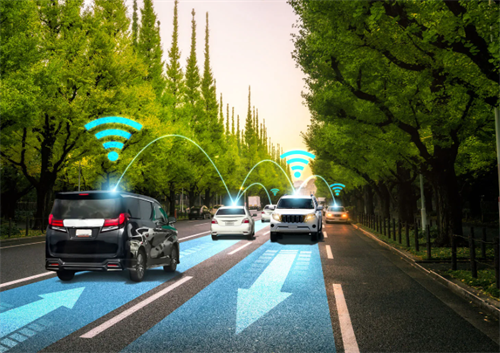
While powertrains shift from combustion to electric, a deeper transformation is taking place: the race to build competent driver assistance and autonomous systems. The question is not who owns the single most advanced piece of technology. It is about three fundamentally different product philosophies colliding on the same track.
Mercedes, Tesla, and the Chinese trio of Nio, Xpeng, and Li Auto all approach the problem from entirely different starting points. And that is where the real divergence begins.
A fundamental fork in the road: regulation logic vs. function logic
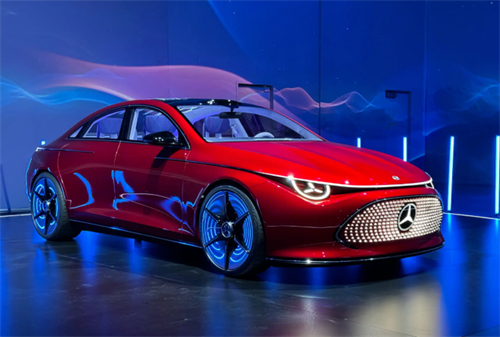
Mercedes was the first automaker in the world to receive international certification for SAE Level 3 conditional automated driving under UN Regulation R157. Its Drive Pilot system, introduced in 2022, allows a driver to legally take their hands off the wheel and their eyes off the road in specific situations on German highways.
The engineering is meticulous. It uses lidar, redundant braking and steering systems, and high-precision positioning. The goal is zero accidents within a narrow operational envelope. But the core contradiction is this: from day one, the system was designed to satisfy regulations first, not to work in as many places as possible.
In January 2026, the German business newspaper Handelsblatt reported a critical development in their article "Mercedes-Benz stoppt vorerst L3-Autonomie-Pläne in der S-Klasse" (published January 13, 2026). Mercedes had decided to put Drive Pilot deployment on hold for the upcoming S-Class facelift.
Spokesman Tobias Mueller admitted the system offers "limited practical benefit to customers," as quoted directly in the Handelsblatt report. The operating conditions are just too narrow. It works only in heavy highway traffic, only below roughly 64 km/h (about 40 mph), only with clear weather, good light, and an active HD map connection.
That Mercedes is publicly rethinking this path says a lot about the commercial viability of a regulation-first approach.
Tesla took the opposite road entirely.
When the company began rolling out FSD Beta in the United States in 2020, the goal was clear: build a vision-based neural network that could handle the vast majority of road scenarios. According to Tesla's own disclosures published on its official blog, cumulative FSD miles driven surpassed 1.6 billion by 2025.
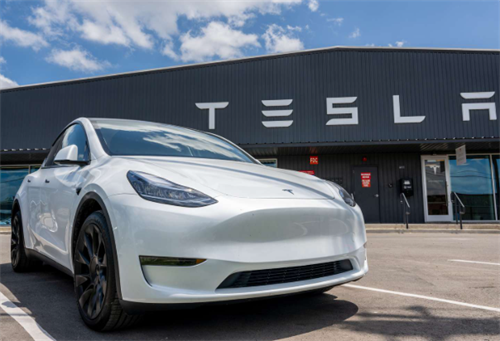
The V13 architecture, detailed in Tesla's "Full Self-Driving (Supervised) V13: Technical Architecture Overview" published on the Tesla Engineering Blog in March 2026, introduced a temporal transformer that gives the system something close to object permanence. If a pedestrian disappears behind a parked truck, the system still "knows" the person is probably there.
That is a genuinely hard problem, and solving it changes how the car behaves in crowded environments.
Nio, Xpeng, and Li Auto charted a middle course with fusion-based sensing and in-house software.
Xpeng pivoted aggressively to an end-to-end large model approach in 2024. According to the "XNGP 2025 Annual Intelligent Driving Report" published by Xpeng on its official newsroom in January 2026, the average number of human takeovers per 1,000 kilometers had dropped to 1.20 by Q4 2025.
Li Auto's AD Max system logged 1.86 takeovers over the same distance in the same period, as stated in the company's own annual technical report released in early 2026.
These numbers come from different measurement methodologies and should not be compared head-to-head. But the trend is unmistakable: system stability in high-frequency scenarios is improving fast.
Two different clocks: weekly iterations vs. five-year cycles
At its core, the competition in driver assistance is about data and iteration speed.
Tesla currently has over four million vehicles on the road capable of feeding data back into the training loop. This is a structural advantage no other automaker comes close to matching.
Every car driving on public roads contributes edge cases that no simulation environment can fully replicate.
The dynamics in China are different but equally intense. According to the "China ADAS and Autonomous Driving Market Tracker, Q4 2025" published by Counterpoint Research in 2025, Huawei's ADS system has accumulated over 100 billion kilometers of assisted driving mileage. Huawei captured roughly 28 percent of China's high-end intelligent driving market during that quarter.
Momenta, a major third-party supplier, disclosed at its 2026 technology partner summit that its urban point-to-point navigation system covers over 60 Chinese cities, with a roughly 60 percent share among third-party solutions. These figures are based on Momenta's own public presentation at the event.
Traditional luxury brands face a structural bottleneck on the data side.
Based on Mercedes-Benz Group AG's official "Drive Pilot: SAE Level 3 Conditional Automated Driving System Description" published on Mercedes-Benz Media in 2024, Drive Pilot is only certified on just over 13,000 kilometers of German autobahn and a handful of approved highways in Nevada and California.
Within those segments, the number of users who actually engage the system and permit data upload is tiny. Without a steady stream of real-world data, it is nearly impossible to build a self-reinforcing improvement cycle. That is the deepest structural disadvantage.
The iteration cadence tells an equally revealing story.
Tesla FSD sees a major architecture update about once or twice per year, with smaller improvements pushed every eight to twelve weeks. This is visible to anyone tracking Tesla's public software release history.
Nio established a monthly OTA update rhythm for its driver assistance stack in 2025, with each release containing concrete functional expansions. This pace is observable from the company's public-facing update logs.
The development cycle for a new Mercedes S-Class, by contrast, runs around five years. A mid-cycle refresh takes two to three. That means the driver assistance system in a 2024 luxury flagship likely had its core architecture locked in around 2019.
In a software-defined era, that pace is a serious competitive handicap.
There is also a psychological factor worth examining.
Luxury brand buyers have very low tolerance for imperfect functions. Someone spending over a hundred thousand dollars on a sedan tends not to accept a system that hesitates, brakes unexpectedly, or misjudges a merge.
A meaningful share of Tesla and Chinese new force customers see driving with advanced assistance as participating in an evolving technology. This difference in user psychology quietly shapes how aggressively each camp can afford to iterate.
The gap: everywhere driving vs. conditional driving
For an ordinary driver, whether a system "feels good" depends heavily on how many everyday scenarios it actually covers.
Tesla's FSD V13 officially entered the Chinese market in April 2026. Early community feedback, aggregated in Tesla's public beta release notes and summarized by the company, shows the system handles highways and major urban arterials with few interventions. But it still struggles noticeably on unmarked alleys, crowded mixed-traffic streets, and construction zones with inconsistent signage.
This reinforces a durable lesson: driver assistance is not just about algorithm quality. It is a marathon of local data and scene understanding.
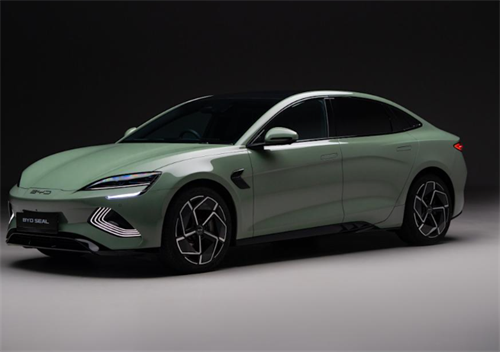
Xpeng announced during its spring technology event in March 2026 that XNGP now supports "unrestricted city, unrestricted route" point-to-point driving across China. The internal test metric was 0.82 takeovers per 1,000 kilometers, a figure drawn from the company's live presentation at that event.
That figure comes from controlled test conditions. Real-world user experience will vary. But the downward trend across years is consistent.
Mercedes offers Drive Pilot Assist, a Level 2+ highway feature set that can handle automatic lane changes and on-ramp to off-ramp navigation. It remains a highway-only system.
The much-discussed point about Mercedes accepting legal liability only applies during the narrow moments when Drive Pilot is genuinely active. Every other mile is standard Level 2 with full driver responsibility. The gap between those two modes creates a compelling marketing credential that delivers limited everyday benefit to the owner.
Design philosophy matters too.
The Mercedes S-Class is product-defined heavily around being driven, whether by a chauffeur or in a corporate fleet. Driver assistance is a refinement in that worldview, not a core value proposition.
Among the new forces, driver assistance is woven directly into the brand identity from day one.
Pricing tells the same story. Drive Pilot costs between €5,000 for the S-Class and €9,000 for the EQS in Germany, according to Mercedes' official pricing guides. In the United States, it is offered only as a subscription. The new forces took the opposite approach, lowering or eliminating the upfront option cost to encourage rapid user adoption.
Can partnerships close the gap? Luxury brands' local bets in China
To their credit, the German brands have not waited passively.
Between 2025 and early 2026, all three made significant partnership moves in the Chinese market. Audi announced that its new electric models sold in China now ship with Huawei's full ADS stack. BMW stated it will use Momenta's technology for an end-to-end highway pilot, with city coverage planned before 2027. Mercedes also partnered with Momenta to co-develop China-specific intelligent driving systems.
These announcements were made through each company's official press channels during the same period. The strategy can close the functional gap quickly. An Audi with Huawei's ADS can now do city point-to-point navigation, something unthinkable just a year ago.
But the partnership model has an inherent limit.
Long-term competitiveness in driver assistance depends on whether the system keeps getting better by learning from real customer miles. When you rely on a third-party stack, meaningful control over the iteration loop shifts to the supplier.
The new forces place their driver assistance teams at the center of their organizations, often with headcounts above 3,000 people. That commitment level is documented in their respective annual reports and public filings.
That organizational intensity is not something a cooperation agreement can replicate. You either build that muscle internally, or you do not.
Look at this from a broader perspective.
Driver assistance capability is quietly rewriting the definition of a luxury car. For decades, premium cars competed on engine smoothness, suspension refinement, interior craftsmanship, and brand heritage. Today, a car that navigates itself through city streets offers a categorically different kind of value than one that only does adaptive cruise control on a highway.
This explains something once hard to imagine: new Chinese brands now sell vehicles comfortably above fifty thousand dollars and are taken seriously by the market.
For consumers, the right choice depends on real driving patterns.
If most of your miles are long highway trips, today's Level 2+ highway packages from major brands are already mature enough. If your daily commute weaves through complex urban streets, then real-world city performance and local adaptation depth deserve the most weight in your decision.
FAQ
What does Drive Pilot's Level 3 certification really mean? Can I actually stop paying attention?
Legally, Drive Pilot allows you to take your eyes off the road under specific conditions, and Mercedes accepts liability if something goes wrong. Those conditions are narrow: congested highway traffic below about 60 km/h, clear weather, good lighting, and HD map coverage. The moment speed rises or the car leaves the mapped corridor, you get a handover warning. Most daily commutes simply do not fit those parameters for very long.
Why don't the traditional luxury brands just acquire an autonomous driving company to fix the gap?
An acquisition solves the "capability from scratch" problem. It does not solve the data flywheel or the iteration culture problem. A continuously improving system needs a pipeline from fleet data collection and annotation to training and OTA deployment, wired deep into the vehicle's electrical architecture. The organizational structures, supplier relationships, and product cycles inside legacy automakers create a friction that is often harder to overcome than the technology itself.
As a buyer in North America, which systems are actually useful right now?
As of early 2026, Tesla FSD offers the broadest coverage across the U.S. It works in most areas, though performance varies locally. Mercedes Drive Pilot is limited to approved sections in Nevada and California, and conditions must align. Ford BlueCruise and GM Super Cruise focus on the highway network, each covering over 400,000 miles of roadway as stated in their respective official marketing materials. None handle city streets. In terms of sheer functional breadth, Tesla retains a clear lead on its home turf.
Is end-to-end the inevitable direction? What are the risks?
End-to-end neural networks are becoming the industry's main direction, with Tesla, Xpeng, Li Auto, and Nio all publicly committed to this path. The upside is more human-like behavior and better generalization. The risk is unpredictable behavior in extreme scenarios never seen in training data. Some automakers keep traditional redundancy layers in the perception stack for this reason. The future is probably not a clean either-or but a gradual convergence.
References
[1] Handelsblatt. "Mercedes-Benz stoppt vorerst L3-Autonomie-Pläne in der S-Klasse." January 13, 2026.
[2] Tesla, Inc. "Full Self-Driving (Supervised) V13: Technical Architecture Overview." Tesla Official Engineering Blog, March 2026.
[3] XPeng Inc. "XNGP 2025 Annual Intelligent Driving Report." XPeng Official Newsroom, January 2026.
[4] Counterpoint Research. "China ADAS and Autonomous Driving Market Tracker, Q4 2025." 2025.
[5] Mercedes-Benz Group AG. "Drive Pilot: SAE Level 3 Conditional Automated Driving System Description." Mercedes-Benz Media, 2024.
About the Author:
Automotive technology analyst with a Master’s in vehicle engineering from the Technical University of Munich. Former ADAS systems developer at a major German Tier 1 supplier for six years. Now an independent consultant focused on autonomous driving system architecture and real-world deployment strategies.
Disclaimer
This article is based on publicly available information as of April 24, 2026, and is intended to provide objective analysis and reference material on driver assistance technologies. All system functions, performance metrics, and data cited are drawn from public announcements, third-party research reports, and official company disclosures. The author makes no warranty regarding the timeliness of this information, as technologies, manufacturer strategies, and regulations may change. This article does not constitute purchase advice or investment guidance. Readers should rely on the latest official information and their own driving experience when evaluating any vehicle or driver assistance system.
Related Articles
Aggressive America, Cautious Europe, Steady China: Is the Global L3 Self-Driving Track Really Diverging?https://zhongtaiserver.zhongtongtec.com/storage/WebsiteAdmin/view/2026-04/autotriad.com/driving/aggressive-america-cautious-europe-steady-china-is-the-global-l3-selfdriving-track-really-diverging.html
Recommended for you: