Aggressive America, Cautious Europe, Steady China: Is the Global L3 Self-Driving Track Really Diverging?
Author: Daniel Mitchell | Last updated: April 23, 2026 | Reading time: ~10 minutes
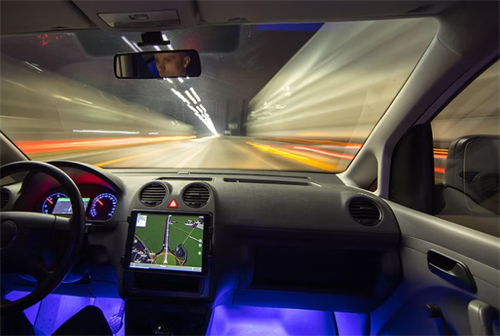
In early 2026, a Tesla owner in California fell asleep on Highway 101 while using FSD. The car drove 40 miles on its own before police pulled it over.
This didn't make headlines. Similar stories have become too common.
What actually matters is how NHTSA handled it. They didn't shut down FSD. They just asked Tesla for data, business as usual.
Around the same time, a Mercedes S-Class owner in Stuttgart activated Drive Pilot in a traffic jam. He took his hands off the wheel to drink coffee. He got a ticket. Local police decided he reacted too slowly when the system asked him to take over.
Meanwhile in Shanghai, a Huawei-backed AITO M9 owner was handling work emails on the highway with the car in autonomous mode. The car encountered sudden road construction. The system slowed down and changed lanes smoothly in 0.8 seconds. The black box recorded everything. Insurance paid out under L3 terms.
These three real scenes paint the strangest, most honest picture of global self-driving in 2026. The same words "autonomous driving" mean completely different legal relationships, usage boundaries, and risk allocations in different countries.
This isn't a technology split. It's different societies answering the same question: "Can machines make life-or-death decisions for us?" For everyday consumers, understanding this difference matters more than any sensor spec.
Part One: Three Paths, Three "Trust Contracts"
The American Way: Tesla's "Million-Mile Gamble"
At Tesla's November 2025 shareholder meeting, the company announced FSD V14.3 had achieved "near-zero human intervention" driving. Musk's exact words, as recorded in the official meeting transcript: "If you drive 1,000 miles a week, you might need to intervene once" (source: Tesla, Inc. Shareholder Meeting Transcript, November 2025).
Then in February 2026, Tesla made a surprising move. FSD stopped offering a one-time purchase option. It went fully subscription-only at $199 per month (source: Tesla official website pricing update, February 2026).
Behind this business decision sits a tricky legal reality. FSD in the U.S. is still classified as Level 2 assisted driving under SAE J3016 standards (source: SAE International, J3016:2021 Taxonomy and Definitions). No matter how much it acts like "autonomous driving," legal responsibility stays with the driver.
NHTSA's approach is "punish after the fact." They don't set entry barriers. They investigate after crashes happen, then fine, then demand fixes.
In April 2024, NHTSA launched an investigation covering 2.6 million Teslas (source: NHTSA Office of Defects Investigation, EA24001, April 2024). The final conclusion? Just ask Tesla to push a software update over the air. No feature restrictions.
This "run first, regulate later" model is basically a social experiment. Tesla uses millions of cars on real roads to train its algorithms. Real accidents become training data. Consumers become test subjects, often without realizing it.
NHTSA's public database under the Standing General Order on ADS and ADAS incident reporting shows at least 40 fatal crashes involving Tesla Autopilot/FSD by end of 2025 (source: NHTSA Standing General Order incident database, cumulative through Q4 2025). Yet FSD subscriptions keep rising. For most users, the promise of "almost no intervention" outweighs the risk of "you're on the hook if something goes wrong."
The European Way: Mercedes and the Compliance Trap
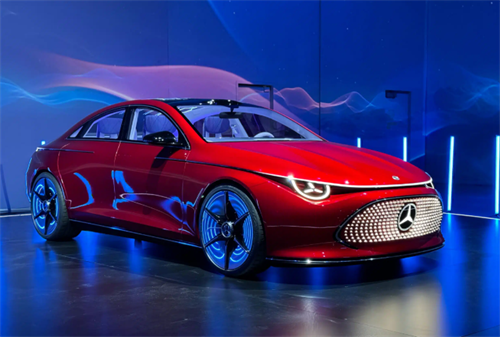
Mercedes Drive Pilot tells the opposite story.
In 2022, it became the world's first mass-production system with German government L3 certification. It could handle "conditional autonomous driving" on specific highway sections below 37 mph. Mercedes took legal responsibility. This should have been a milestone.
Three years later, in early 2026, Mercedes announced it would pause Drive Pilot expansion. The next-generation system would drop to L2++ assisted driving (source: Mercedes-Benz Annual Earnings Call, March 2026, statement by CEO Ola Källenius).
What went wrong? Not the technology. The compliance costs and business returns simply didn't match.
EU Regulation UN-R157 sets extremely tight boundaries for L3 systems. Highways only. Below 37 mph. Good weather. Daytime only. Clear lane markings (source: UNECE, UN Regulation No. 157 — Automated Lane Keeping Systems, effective 2022).
In Germany, a major auto market, Drive Pilot's usable roads might total less than 15% of all highways. Worse, each EU member state implements UN-R157 differently. Mercedes had to apply for separate certifications, adjust software, and train service teams for each market.
A Mercedes engineer told Automotive News Europe that Drive Pilot's hardware cost per vehicle ran about €4,000. Annual software maintenance and compliance costs exceeded €20 million (source: Automotive News Europe, "Mercedes Rethinks L3 Strategy," January 2026). Yet in all of 2025, fewer than 5,000 cars in Germany activated the feature. The math didn't work.
Mercedes' choice reveals something the industry has long avoided. L3's legal definition says "the system takes full responsibility within limits." But if those limits are too narrow, the feature has almost no practical value for ordinary users.
The Chinese Way: The Design Behind "Entry Approval"
China's path looks most "middle-of-the-road." But its execution is the most systematic.
In December 2025, China's Ministry of Industry and Information Technology, together with three other ministries, released the first L3 approval list. Changan, BAIC, Seres, and BYD received highway L3 test licenses (source: MIIT joint ministerial announcement, December 2025). Starting in 2026, 23 cities including Beijing, Shanghai, and Guangzhou opened highway L3 to commercial operation.
Unlike America's "hands-off" approach or Europe's "strict limits," China uses a three-pillar system: entry approval, insurance, and black boxes.
For entry approval, you can't just call your system L3. You must pass official test track validation, public road testing, and third-party safety assessment. For insurance, L3 vehicles must carry dedicated autonomous driving liability coverage. Premiums adjust dynamically based on safety records — good records get 30% discounts. For black boxes, all L3 vehicles must install GB-standard data recorders. Accident responsibility depends on black box data.
This design is clever. It doesn't dump full responsibility on consumers like America. It doesn't restrict scenarios to near-uselessness like Europe. China's L3 currently covers only highways. But highways are where autonomous driving actually works best — structured roads, same-direction traffic, no pedestrians. Making it truly work in this one scenario beats making it nominally available everywhere.
According to GG Auto Intelligence, in Q1 2026, 40% of Chinese vehicles priced $22,000-$28,000 already carried lidar (source: GG Auto Intelligence, "China Smart Driving Hardware Penetration Report," Q1 2026). Lidar unit prices have dropped to around $200. L3 hardware costs are becoming affordable for mass-market cars.
Huawei's Qiankun ADS holds 27.8% city NOA market share (source: GG Auto Intelligence, Q1 2026). Momenta's system is in mass production at multiple brands. But these city functions remain legally L2. Only approved highway scenarios count as L3.

Part Two: Under the Divergence, What Consumers Should Actually Care About
What Level Is Your "Smart Driving" Really?
This is the messiest question of 2026. The gap between marketing language and official technical classification is huge.
Tesla markets FSD as "Full Self-Driving" in America. Legally, it's L2. Huawei markets "Advanced Intelligent Driving" and "City NCA" in China. Officially, also L2. Mercedes Drive Pilot is L3 in Europe. But on S-Class models sold in China, the same hardware only offers L2 — China hasn't approved that system's L3 entry.
The most practical test for consumers: check who takes accident responsibility. If the manufacturer explicitly promises "we're responsible when the system is in control under specific conditions," that's real L3. If the marketing says "reduces driving fatigue" and "improves safety," but the fine print says "driver must monitor at all times," that's L2. No matter how smart it seems.
Your Smart Features Will "Shrink" When You Cross Borders
A Chinese engineer working in Silicon Valley described his frustration. He bought a Huawei ADS-equipped AITO M9 in China. Highway L3 worked great. When he shipped the car to America, smart driving barely functioned. Not a hardware problem. Map data, traffic rules, and cloud service compliance restrictions blocked it.
The reverse happens too. A German student rented a Tesla Model Y in China. The FSD features looked nothing like the American version. City navigation assist was heavily simplified. Tesla hasn't obtained China's high-definition mapping license yet.
This reality needs acknowledgment. Smart driving isn't like air conditioning or speakers — hardware features that work the same everywhere. It's a service deeply tied to local regulations, maps, data, and insurance systems. When driving across borders, don't assume the smart features you bought in Country A work the same in Country B.
Is Paying for L3 Worth It?
In 2026, smart driving payment models are changing fast. Tesla went fully subscription at $199/month (source: Tesla official website, February 2026). Huawei ADS offers both one-time purchase at about $5,000 and subscription at about $70/month (source: Huawei AITO configurator, Q1 2026 pricing). Mercedes Drive Pilot in Europe costs about $540 monthly (source: Mercedes-Benz Drive Pilot subscription page, Q1 2026).
My advice: At this stage, choose flexible subscriptions over one-time purchases.
The reason is simple. L3 technology evolves too fast. The "lifetime feature" you buy today may be outdated in two years. More critically, L3 regulatory boundaries keep shifting. Subscriptions let you decide month by month whether the features and regulations justify the cost.
Part Three: The Divergence Is Temporary, Convergence Is the Trend
The three paths look like they're heading in different directions. But 2026 already shows convergence signals.
Tesla FSD V14.3 remains legally L2 in America. But its technical architecture is preparing for L3. Musk said in November 2025 that FSD in China would "comply with all Chinese regulatory requirements" (source: Tesla Shareholder Meeting Transcript, November 2025). This means Tesla may need to accept China's entry testing and compliance processes. If FSD gets L3 approval in China, it could force America to finally debate federal L3 legislation.
Mercedes pausing Drive Pilot doesn't mean abandoning L3. CEO Ola Källenius said clearly at the March 2026 earnings call that the next-generation L3 system launches in 2027 (source: Mercedes-Benz Annual Earnings Call transcript, March 2026). It will support higher speeds and more complex scenarios. Europe is shifting from "excessive caution" toward "pragmatism."
China, building on L3 pilots, is now exploring limited L4 openings. Certain zones in Beijing and Shanghai already allow robotaxis to operate with no safety driver. Huawei, Baidu, and Pony.ai accumulated over 31 million miles of city L4 testing in 2025 (source: China ITS Alliance, "2025 Autonomous Driving Annual Report," published January 2026). This "L3 at scale + L4 piloting" dual-track strategy may be the most sustainable path globally.
A deeper trend: L3 might just be a transitional form. Its core problem is the "handoff" — when should the machine take over? When should it return control to the human? How long should the transition window be? These are extremely hard to solve perfectly. Within the next three to five years, we may witness the widespread application of L3 on highways, while urban driving will directly transition to the L4 level.
Global L3 self-driving is indeed diverging. But this isn't about right or wrong. It's different societies with different risk appetites facing technological change. America trusts market trial-and-error. Europe trusts institutional constraints. China trusts gradual piloting. All three logics have merit. All three have costs.
For ordinary consumers, rather than obsessing over "which country has the best L3," focus on more practical questions:
First, check official certifications when buying. Don't just read marketing materials. Check whether the car has government L3 approval. In China, check MIIT's published approval list. In Europe, look for UN-R157 type approval. In America, there's currently no federal L3 certification — watch state-level regulations instead.
Second, understand your insurance policy. L3 accident responsibility works completely differently from L2. Confirm whether your auto insurance or dedicated smart driving coverage includes accidents during system control.
Third, keep expectations realistic. L3 in 2026, whether in China, America, or Europe, only works under specific conditions. Before taking your hands off the wheel, confirm you're within the Operational Design Domain (ODD).
Fourth, don't prepay too much for "future features." Technology moves too fast. Subscriptions offer more flexibility than purchases.
The final form of autonomous driving won't be "three countries, three standards." But convergence takes time. Until then, what we need as users is clear-headed understanding, not blind trust.
FAQ
Q1: My car supports "City NOA." Is that L3?
A: No. Currently, official L3 approval in China only covers highway scenarios (source: MIIT December 2025 approval list). City NOA, city pilot, and similar functions remain legally L2 assisted driving under SAE J3016 standards, no matter how advanced they seem. "High-end smart driving" in marketing doesn't equal officially certified L3.
Q2: If Tesla FSD gets approved in China, will it be L3?
A: It depends on meeting China's L3 entry conditions. Musk's description of "no intervention needed" reflects technical capability (source: Tesla Shareholder Meeting, November 2025). But legal classification requires official testing, responsibility definition, and insurance coordination. FSD currently lacks L3 certification in China.
Q3: Why did Mercedes pause Drive Pilot despite having L3 certification?
A: Limited demand, high costs, and overly narrow usage scenarios. A Mercedes engineer disclosed to Automotive News Europe in January 2026 that hardware cost per vehicle was €4,000 and annual compliance costs exceeded €20 million, while fewer than 5,000 German customers activated the feature in 2025. Mercedes is waiting for next-generation systems that cover more scenarios at lower cost.
Q4: Who's responsible if an accident happens in L3 mode?
A: In China, if the accident occurs within the L3 system's ODD and the system didn't request takeover beforehand, the manufacturer or system supplier holds responsibility. If the system requested takeover and the driver didn't respond in time, responsibility may shift. Final determination depends on black box data and insurance terms.
Q5: Will L3 reach cars under $28,000 in the next three years?
A: Very likely. Lidar prices have dropped to around $200. Forty percent of $22,000-$28,000 vehicles in China already carry smart driving hardware (source: GG Auto Intelligence, Q1 2026). As scale grows, L3 hardware costs will fall quickly.
Q6: Can I use my American-bought Tesla's FSD in China?
A: No, not directly. FSD depends deeply on local map data, traffic rules, and cloud services. Tesla vehicles sold in China need separate adaptation for Chinese FSD, which requires Chinese regulatory approval.
References
[1] UN Regulation No. 157 — United Nations Economic Commission for Europe (UNECE). Uniform provisions concerning the approval of vehicles with regard to Automated Lane Keeping Systems (ALKS). Effective 2022. The world's first international unified technical standard for L3 autonomous driving systems.
[2] NHTSA Standing General Order — National Highway Traffic Safety Administration. Incident Reporting for Automated Driving Systems (ADS) and Level 2 Advanced Driver Assistance Systems (ADAS). By end of 2025, the database contained over 900 ADAS-involved incident reports.
[3] SAE J3016:2021 — SAE International. Taxonomy and Definitions for Terms Related to Driving Automation Systems. The authoritative basis for L0-L5 level definitions, widely referenced by the global auto industry and regulators.
[4] European Commission: "Connected and Automated Driving" Policy Framework — EU Transport Policy. Articulates Europe's "safety first, gradual opening" regulatory philosophy for autonomous driving and implementation requirements for UN-R157 at member state level.
[5] Tesla FSD V14.3 Shareholder Meeting Transcript (November 2025) — Tesla, Inc. Elon Musk's public statements regarding FSD V14.3 technical capabilities, China entry progress, and subscription strategy.
About the Author
Daniel Mitchell is a former Detroit automotive engineer who participated in ADAS system development at multiple American automakers. He now writes the independent Automotive Insights column, focusing on intelligent driving policy, automotive safety standards, and global auto market analysis. He provides industry observations that combine technical depth with practical value for car enthusiasts and everyday consumers in Europe and America.
Disclaimer
The content of this article is based on publicly available information and industry observations as of April 2026. It is intended to provide reference analysis for car enthusiasts and general consumers. It does not constitute vehicle purchase, investment, or legal advice. Autonomous driving technology, regulations, and market conditions change rapidly. Specific features depend on each manufacturer's latest official statements and local laws. All technical specifications, policy developments, and market data cited come from public sources. The author and publishing platform assume no responsibility for absolute accuracy or timeliness. Driving safety is the first priority. Regardless of what intelligent driving system your vehicle has, drivers must obey traffic laws and maintain necessary attention at all times.
Related Articles
L2, L2+, L2++: How Can Consumers Tell What's Real and What's Just Marketing?https://zhongtaiserver.zhongtongtec.com/storage/WebsiteAdmin/view/2026-04/autotriad.com/driving/l2-l2-l2-how-can-consumers-tell-whats-real-and-whats-just-marketing.html
Recommended for you: